Basic Internet Architecture and ISP Tiers
Basic Internet Architecture
The Internet is not a single network. It is a huge collection of many networks connected together. These networks belong to universities, companies, governments, and Internet service providers. To make this global system work, different networks need places where they can connect and exchange traffic. This structure forms the basic architecture of the Internet.
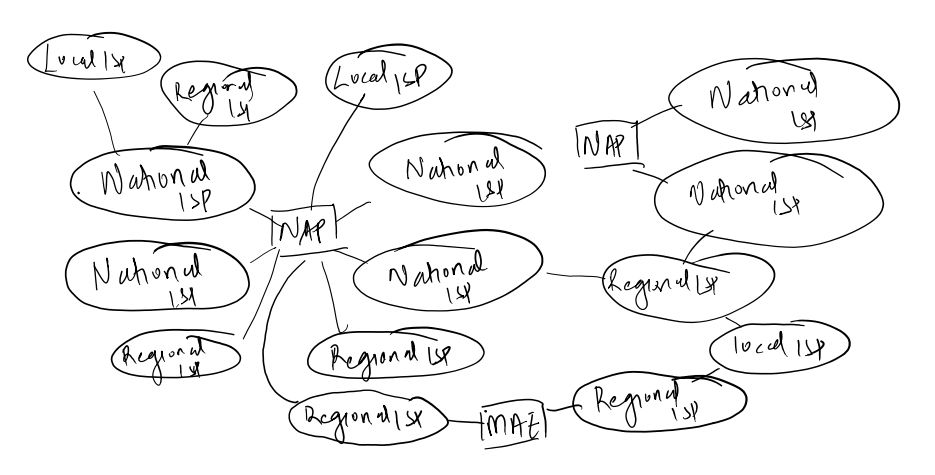
Fig: Internet Architecture
At the center of this architecture are Internet access points where networks meet, share traffic, and pass data across regions and countries. Two important components in this architecture are Network Access Points and Metropolitan Area Exchanges.
Internet Access Points
Internet Access Points are locations where Internet networks connect and exchange traffic. When data moves from one network to another, it often passes through these connection points. They help different Internet providers communicate and keep global connectivity stable.
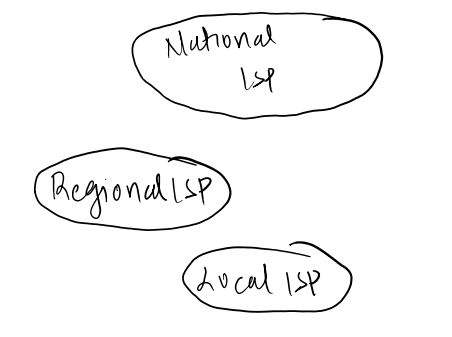
Fig: Access Point along with ISP
Two common types of Internet access points are Network Access Points and Metropolitan Area Exchanges.
Network Access Points (NAPs)
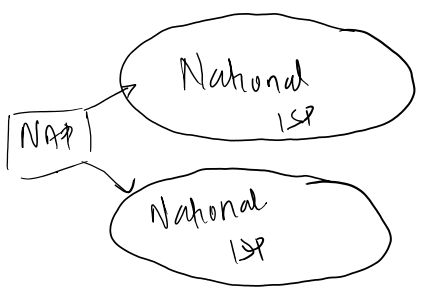
fig:NAP
Network Access Points connect large national Internet service providers. These are major infrastructure locations where large networks exchange huge amounts of Internet traffic.
Large regional and local ISPs can also connect directly to NAPs if they have the required infrastructure and agreements. Historically, there were about a dozen major NAPs in the United States. These facilities were often operated by major telecommunications companies such as Sprint and AT&T.
NAPs act like major highway intersections for Internet traffic. Data from many different networks arrives at these points and then travels to its next destination.
Metropolitan Area Exchanges (MAEs)
Metropolitan Area Exchanges connect regional Internet service providers within a metropolitan area or region. They allow smaller networks to exchange traffic locally instead of sending everything through national backbone networks.
In the United States, there have been around fifty MAEs operating in different cities. These exchange points help reduce network congestion and improve performance because traffic can stay within the region instead of traveling long distances.
What Is an ISP
An Internet Service Provider, or ISP, is a company that gives users access to the Internet. When you connect your computer, phone, or router to the Internet, the connection usually goes through an ISP.
ISPs manage network infrastructure, assign IP addresses, route traffic, and maintain connections to other networks. They operate routers, data centers, and transmission lines that move Internet traffic across cities, countries, and continents.
ISPs connect homes, businesses, and organizations to the wider Internet. Without them, users would not be able to reach websites, send emails, or access online services.
How ISPs are inter-connected? Three Tiers of ISPs
ISPs operate in a hierarchy that reflects their role in the global Internet. The three main categories are Tier 1, Tier 2, and Tier 3 providers.
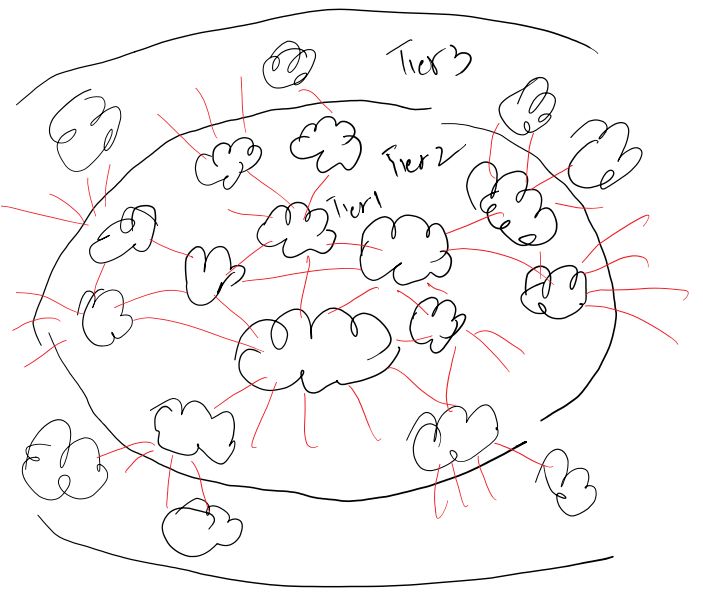
Fig: ISP Interconnections
Tier 1 ISPs
Tier 1 ISPs are at the top of the Internet hierarchy. They operate the global Internet backbone. These providers have massive networks that span continents and connect directly with other Tier 1 providers.
Tier 1 networks exchange traffic with each other through settlement-free peering. This means they do not pay each other to carry traffic because each network already has global reach. These companies maintain the core infrastructure that allows the Internet to function worldwide.
Tier 2 ISPs
Tier 2 ISPs operate at a regional or national level. They connect to Tier 1 providers to access the global Internet, but they may also exchange traffic with other Tier 2 networks through peering agreements.
These ISPs often provide Internet connectivity to businesses, organizations, and smaller providers. They rely partly on Tier 1 networks but still maintain substantial infrastructure of their own.
Tier 3 ISPs
Tier 3 ISPs operate at the local level. These providers deliver Internet access directly to homes and small businesses. They typically purchase Internet transit from Tier 1 or Tier 2 networks.
When you subscribe to Internet service at home, the company providing that connection is usually a Tier 3 ISP. Your data travels from your device to the local ISP, then through higher-tier networks until it reaches the destination somewhere on the global Internet.
Together, NAPs, MAEs, and the three ISP tiers form the backbone of the Internet’s architecture. This layered structure allows millions of networks and billions of devices to communicate smoothly across the world.