How Traffic Travels through Backbone?
How Traffic Travels Through the Internet Backbone
When you send an email, stream a video, or visit a website, the data doesn’t just magically appear. It travels through a complex hierarchy of Internet networks, starting from your local provider and eventually reaching the global Internet backbone. Understanding how this works helps you see why Internet connectivity can vary depending on your provider and location.
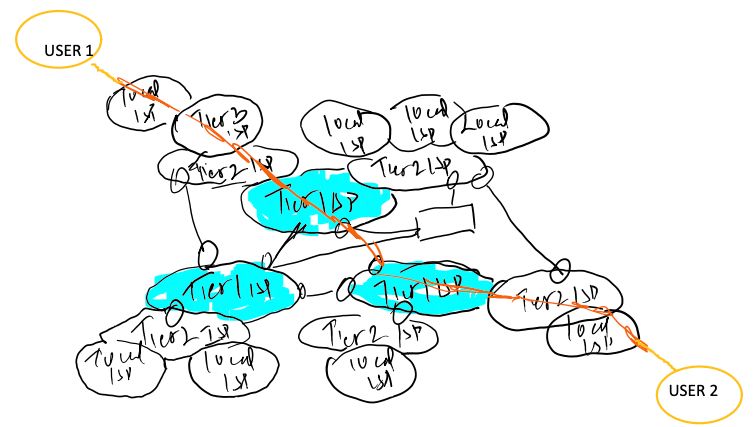
The Role of Tier 3 ISPs
At the bottom of the hierarchy are Tier 3 ISPs, the providers you usually subscribe to for Internet access at home or in your office. These ISPs don’t connect directly to the Internet backbone. Instead, they rely on larger networks to reach the rest of the Internet. A Tier 3 ISP’s network typically covers a city, town, or small region.
Because they don’t have direct access to the backbone, Tier 3 providers must pay for connections to Tier 2 ISPs. This cost is part of why some smaller ISPs charge more for premium speeds or services.
Tier 2 ISPs: The Regional Networks
Tier 2 ISPs operate bigger networks that cover larger areas—often an entire state or multiple regions. They have their own infrastructure but still need to connect with Tier 1 ISPs to access the global Internet. By working with Tier 1 providers, Tier 2 ISPs ensure that local traffic can reach any destination worldwide.
Tier 1 ISPs: The Backbone of the Internet
At the top of the hierarchy are Tier 1 ISPs, the backbone providers that maintain global networks. These providers own the infrastructure to route traffic across continents, under oceans, and between countries. Because of their extensive networks, they can reach every other network on the Internet without paying for transit.
How Traffic Moves
Here’s how a single piece of data travels from one computer to another on the other side of the world:
- The data leaves your computer and goes to your Tier 3 ISP.
- Your Tier 3 provider forwards it to a Tier 2 regional ISP.
- The Tier 2 ISP sends it to the Tier 1 backbone provider, which determines the most efficient route across the global network.
- The traffic is then sent down to the destination’s Tier 2 ISP.
- Finally, it reaches the Tier 3 ISP serving the target computer and is delivered to the user.
This multi-step journey happens in milliseconds, but it’s what allows billions of devices to communicate seamlessly every day.
“The Internet backbone is like a global highway system. Tier 3 ISPs handle local streets, Tier 2 ISPs manage regional highways, and Tier 1 ISPs run the intercontinental expressways,” explains network engineer Daniel Liu.
Why It Matters
Understanding this structure explains why your Internet speed and reliability can differ. Local networks, regional routing, and backbone congestion all play a role. It also shows why partnerships between Tier 2 and Tier 1 ISPs are essential to keep the Internet connected worldwide.
FAQ
Q1: What is a Tier 1 ISP?
A: A Tier 1 ISP is a provider with global network infrastructure that can reach every other network without paying for transit.
Q2: Why do Tier 3 ISPs use Tier 2 ISPs?
A: Because Tier 3 ISPs don’t have direct access to the global backbone, they rely on Tier 2 ISPs to route traffic efficiently.
Q3: How does Internet traffic travel from one country to another?
A: It travels through Tier 3, Tier 2, and Tier 1 ISPs, passing through regional and global networks until it reaches the destination.
Q4: Can a Tier 3 ISP connect directly to a Tier 1 ISP?
A: Rarely. Direct connections are costly, so most Tier 3 providers go through Tier 2 ISPs.
Q5: What is the Internet backbone?
A: It’s the global network infrastructure maintained by Tier 1 ISPs that carries data between regions and countries.
Internal Links: