IPv4 Layer Overview
IP Layer Overview
When you think about how data moves across the Internet, the IP layer sits right at the center of everything. It connects the lower layer that deals with physical transmission and the upper layers that handle applications and reliability. Without this layer, devices would have no clear way to find each other or decide where data should go.
In the TCP/IP model, the IP layer is also called the Internet layer. Its main job is simple in idea but complex in execution. It takes data from the transport layer, assigns logical addresses, and makes sure packets move from the source to the destination across multiple networks.
Relationship with Link Layer and Physical Transmission
The IP layer does not directly deal with cables or signals. That responsibility belongs to the network access layer, sometimes called the link layer. This lower layer handles how data is physically transmitted using Ethernet, WiFi, or other technologies. What the IP layer does is prepare packets in a way that the link layer can carry them. Once the IP layer creates a packet, it hands it down to the link layer, which then wraps it into frames and sends it over the medium. On the receiving side, the link layer passes the packet back up to the IP layer.
So you can think of the link layer as the delivery truck, and the IP layer as the system that decides where the truck should go.
Network Layer and Routing Protocols
Routing is one of the most important functions of the IP layer. When a packet leaves your device, it rarely goes directly to the destination. Instead, it passes through multiple routers. Each router makes a decision about where to send the packet next. These decisions are based on routing protocols. Protocols like RIP, OSPF, and BGP help routers learn about network paths and choose the best route. RIP uses a simple method based on hop count. It works well in small networks but does not scale well. OSPF is more advanced and uses link state information to calculate efficient paths. BGP operates at a global level and is used between large networks and Internet service providers to manage routing across the Internet.
All of these protocols help build routing tables, which routers use to forward packets toward their destination.
IP Protocol and Addressing
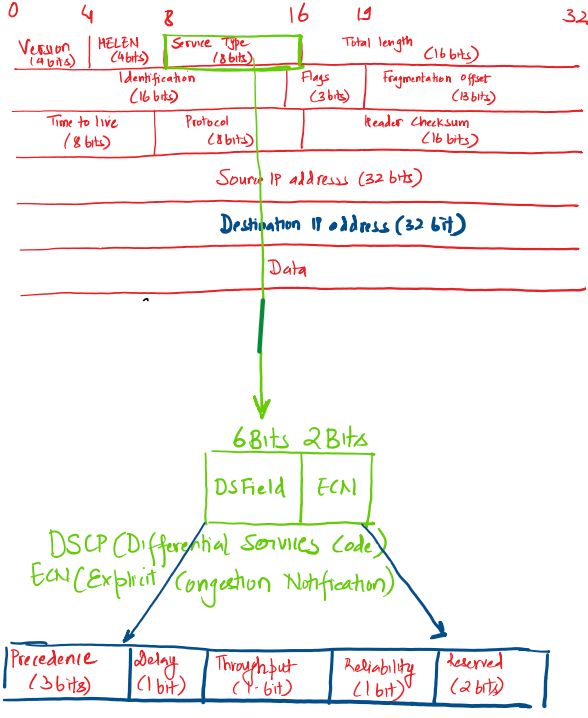
The IP protocol is responsible for logical addressing. Every device on a network has an IP address, which uniquely identifies it. IP uses a structured addressing system. In IPv4, addresses are written in dotted decimal form. In IPv6, they use hexadecimal notation and provide a much larger address space. When data moves through the IP layer, it is packaged into a structure called a datagram. This datagram includes a header and the actual data. The header contains important information such as source IP address, destination IP address, time to live, and protocol type.
Address conventions ensure that every device has a unique identity. This uniqueness is what allows data to travel correctly across networks without confusion.
Datagram Format and Packet Handling
An IP datagram is the basic unit of data at this layer. It contains both control information and the actual payload. The IP layer does not guarantee delivery. It follows a connectionless approach. That means each packet is treated independently. Some packets may take different routes, arrive out of order, or even get lost. Packet handling involves several steps. The packet is created at the source, forwarded through routers, and finally delivered to the destination. Routers check the destination IP address and use their forwarding tables to decide the next hop.
If a packet is too large for a network segment, fragmentation can occur. The packet is broken into smaller pieces and later reassembled at the destination.
Forwarding Table
Every router maintains a forwarding table. This table tells the router where to send packets based on their destination IP address. When a packet arrives, the router looks up the destination in the table and forwards it to the next hop. This process repeats at every router until the packet reaches its final destination.
The efficiency of the Internet depends heavily on how well these tables are maintained and updated.
ICMP Protocol
The IP layer also works closely with ICMP, which handles error reporting and control messages. If something goes wrong during transmission, ICMP sends feedback. For example, if a destination is unreachable, an ICMP message informs the sender. Tools like ping use ICMP to test connectivity between devices.
Routers also use ICMP for signaling and network diagnostics. This helps maintain stability and troubleshoot issues in the network.
Connection with Transport Layer
Above the IP layer sits the transport layer, which includes TCP and UDP. The IP layer delivers packets from one device to another, but it does not guarantee reliability. That responsibility belongs to the transport layer. TCP ensures reliable communication by managing connections, retransmitting lost data, and maintaining order. UDP, on the other hand, provides faster but less reliable communication. The IP header includes a field that indicates which transport protocol is being used. This allows the receiving system to pass the data to the correct process. The IP layer acts as the backbone of the TCP/IP model. It connects physical transmission with higher level communication. It handles addressing, routing, and packet forwarding while working closely with both lower and upper layers.
Without it, devices would not know where to send data or how to reach each other. It does not try to do everything. Instead, it focuses on moving packets across networks efficiently, leaving reliability and application logic to other layers. That separation is what makes the Internet scalable and reliable even at a global level.